
SAP CLOUD DEPLOYMENT
SAP S/4HANA Cloud Deployment Services
Cloud ERP decisions connect business processes, system dependencies and operational ownership. Macrofix helps assess SAP S/4HANA cloud deployment options, document readiness gaps and define a transition plan with the right approval gates. Start with your required processes and controls, not an assumed hosting arrangement.
PLAN YOUR CLOUD LANDSCAPE
Choose the deployment model before planning the move
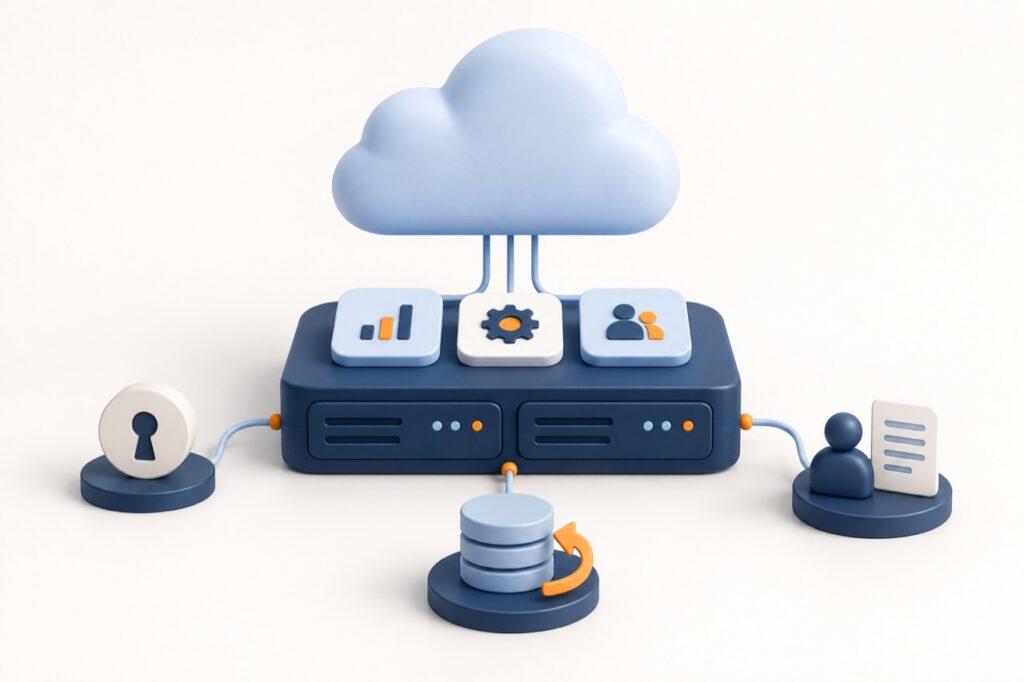
SAP S/4HANA Cloud Public Edition and Private Edition offer different scope and extensibility choices. We compare your process, localization, integration and control requirements with the proposed edition. The assessment records the trade-offs, outstanding checks and decision owners rather than treating the two editions as interchangeable.
For product context, see SAP’s cloud ERP overview. Final product scope, availability and subscription terms must be confirmed for your proposal.
Cloud readiness, architecture and ownership
Our deployment-planning scope covers edition fit, environment readiness, connectivity, access, responsibility mapping, continuity requirements and operational handover. Configuration, data movement and business rollout are coordinated workstreams with their own acceptance criteria. Browse all SAP S/4HANA services for the wider lifecycle.
Public or private edition fit
Compare standard processes, supported extensions, geographic requirements and the route from your current landscape. Public Edition emphasizes standardized cloud processes; Private Edition provides a different scope and extensibility model. We document which requirements fit, which need investigation and which would change the operating model.
- Edition and process-fit assessment
- Landscape and dependency inventory
- Identity and integration readiness
- Documented deployment assumptions
Landscape and dependency readiness
Inventory source systems, interfaces, scheduled jobs, custom developments, reporting dependencies and business calendars. Define proposed environments and connectivity needs with the responsible provider. Capacity, regions and availability commitments are checked against the actual offer, not inferred from the word cloud.
- Provider responsibility mapping
- Business continuity requirements
- Release and regression-test planning
- Transition and handover gates
Identity, access and integration
Plan user identities, role ownership, permitted administrator access and approved communication paths. Check integration and extension compatibility for the selected edition and release. Record authentication, monitoring and exception ownership without exposing credentials or production topology in an enquiry form.
- Current landscape and release inventory
- Required localizations and process scope
- Interface and extension dependencies
- Business availability and approval owners
Continuity and release planning
Define business availability needs, recovery objectives, release testing and incident escalation. Clarify which recovery evidence comes from the provider and which business-continuity tests the customer must perform. A cloud subscription does not automatically prove an end-to-end recovery time or remove the need to test critical workflows.
Transition and operations handover
Agree readiness reviews, rehearsal requirements, transition checkpoints and ownership after launch. A technical system move, a new implementation and an ECC conversion are not the same project. Link the deployment plan to separately scoped implementation, data migration and application support.
A cloud deployment decision pack
The planning pack sets out the proposed edition, landscape assumptions, dependencies, readiness gaps, responsibilities and transition decisions. It gives business and technical owners a shared basis for reviewing supplier proposals and approving the next delivery phase. Unknowns remain visible until validated.
- Edition-fit findings and open questions
- Target landscape and connectivity assumptions
- Readiness gaps with owners and priorities
- Provider/customer responsibility matrix
- Transition gates and test-evidence plan
- Operational handover and escalation outline
Provider, project and customer responsibilities
Map responsibility for subscription provisioning, infrastructure operations, application configuration, user administration, integrations, testing, recovery coordination and escalation. SAP, a hosting provider, Macrofix and the customer may have different roles. The applicable agreement and authorized access determine who can perform each task.
Licensing, infrastructure supply and vendor-controlled operations are included only when stated in the offer. We do not imply license-resale authority, automatic regulatory compliance or unrestricted administration of a provider-managed system.
- Confirm provider-controlled tasks and authorized access
- Record contract-specific commitments and exclusions
- Name customer business and security decision owners
- Keep changes subject to approval and test evidence
From assessment to a validated cloud plan
Review the current landscape and business priorities, compare feasible editions, document the target operating model, validate representative dependencies and agree the transition and handover gates. Findings shape the implementation scope and supplier responsibilities before the customer authorizes a deployment.
- Assess business and landscape requirements
- Compare feasible edition and deployment choices
- Document responsibilities and readiness gaps
- Validate representative dependencies and access
- Agree transition approvals and operational handover
Evidence before deployment acceptance
Acceptance should demonstrate that the agreed environment, access and integration prerequisites are ready, critical workflows have owners, provider obligations are documented and open limitations are understood. Cutover and business go-live require their own approvals. No source system is decommissioned merely because a planning document is complete.
- Edition scope and supplier assumptions confirmed
- Access and connectivity prerequisites checked
- Critical dependency and workflow evidence reviewed
- Continuity and escalation responsibilities documented
- Open risks accepted by named decision owners
SAP S/4HANA cloud deployment FAQs
They are distinct deployment offerings with different process scope and extensibility choices. Public Edition emphasizes standardized cloud processes. Private Edition provides a different scope and extension model. Assess your required processes, geography, integrations and transition route against the current product documentation before selecting an edition.
The route needs assessment. A new implementation, an SAP system conversion and selective data transition have different prerequisites and impacts. Cloud placement alone does not make an ECC system into S/4HANA. Confirm source compatibility, target edition and the separate conversion or implementation scope before planning the move.
Only where a written offer explicitly identifies the licensed product, supplying party, infrastructure provider and included services. This page offers deployment assessment and planning; it does not establish license-resale rights, provider accreditation or a standard bundled hosting entitlement.
No. Product subscriptions, provider services and the customer transformation project have related but separate scopes. Review the actual RISE proposal and responsibility documents before assigning tasks. Configuration, integrations, data, user adoption and business acceptance still need explicit project ownership.
These depend on the selected service, region, agreement, exclusions and tested business-continuity arrangements. Do not assume a universal commitment. Document provider commitments separately from customer workflow recovery and verify residency requirements through the applicable supplier terms and approved design.
The current landscape, edition options, integrations, extensions, security requirements, geography, validation work and transition approach affect effort. Separate assessment fees, implementation work and recurring provider charges. A scoped proposal is needed; there is no universal go-live date or fixed cloud price.
Plan the right cloud operating model
Tell us your current ERP landscape, business locations, essential interfaces and preferred outcome. Macrofix can help build an SAP S/4HANA cloud readiness and deployment plan with clear next steps. Share a high-level summary only; credentials, customer records and confidential architecture should use an approved private channel.