
Data & Analytics Services
Analytics Automation Consulting Services
Repeated exports, spreadsheet preparation and report distribution can leave analysts rebuilding the same process each cycle. Macrofix designs analytics automation around explicit inputs, business rules, quality checks and accountable owners. We scope how workflows run, how outputs reach their audience and what happens when data or dependencies fail, so automation remains understandable after handover.
Discuss Your Analytics Automation Project
Turn Repeated Analysis Into an Owned Workflow
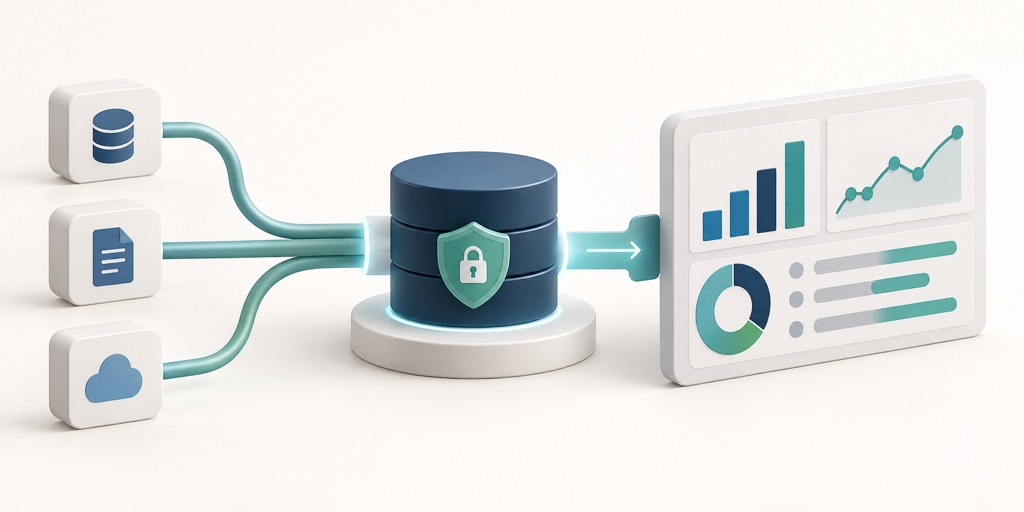
Start with one recurring decision or analytical process: a finance reconciliation, sales-performance pack, operational exception list or reusable dataset. We map the current work, review source readiness and identify where automation is appropriate. Human approval remains part of the design where judgment or business risk requires it.
Analytics automation focuses on repeatable analytical work. Dashboard design and platform selection sit within business intelligence consulting, while wider pipelines and AI programs are considered through Data & AI services.
Analytics Automation From Preparation to Delivery
Choose a process assessment, focused workflow delivery, existing-automation redesign or team enablement engagement. Scope can include data preparation, validation rules, scheduled execution, reporting outputs, exception handling and operating documentation. The proposal identifies sources, workflows, recipients and acceptance evidence. Platform subscriptions, source-system remediation and recurring operation are separate unless included.
Automation Assessment and Use-Case Selection
We inventory repeated analytical tasks, their frequency, inputs, outputs and current manual decisions. Selection considers process stability, data availability, business value and the consequence of a wrong result. A representative use case establishes feasibility before a broader portfolio is committed. We document steps that should remain reviewed or manual instead of assuming every task benefits from unattended execution.
- Recurring task and manual-step inventory
- Source availability and output audience
- Stability, value and risk assessment
- Prioritized pilot and rollout boundaries
Repeatable Data Preparation and Quality Checks
Preparation design makes joins, data types, missing-value handling, calculations and output grain explicit. Agreed checks can identify duplicates, unexpected row counts, invalid values and reconciliation differences. Failed checks take a defined exception route rather than silently producing a report. Source owners remain responsible for upstream corrections; automation does not repair every data-quality problem by itself.
- Joins, data types and preparation rules
- Business calculations and output grain
- Quality thresholds and reconciliation checks
- Exception handling for invalid or missing inputs
Workflow Orchestration and Reporting Delivery
We define execution order, schedules or triggers, source availability and delivery destinations for the selected environment. Restart and retry behavior is planned to avoid unintended duplicate outputs. For Alteryx-based delivery, vendor scheduling guidance illustrates why permissions and execution arrangements must be confirmed. Recipients and distribution permissions are approved before reports are sent or published.
- Execution order and dependency planning
- Schedules or triggers supported by the environment
- Approved report and dataset destinations
- Rerun, retry and duplicate-output safeguards
Analytical Models and Decision Workflows
Where the use case needs forecasting, scoring or scenario analysis, we define the decision, target, data window and evaluation criteria separately from the automation mechanics. Model results need validation and an appropriate review route; a scheduled model is not automatically an accurate one. Predictive work, retraining and any production decision integration are included only when the proposal states them.
Operating Controls, Adoption and Handover
We document source access, runtime dependencies, failure alerts, output ownership and change procedures. Dependencies such as files, macros and configured paths matter when workflows move between environments; Alteryx workflow-dependency guidance is one relevant reference. Handover includes agreed runbooks and walkthroughs. Ongoing monitoring, incident response and service coverage require an explicit operating arrangement.
Agree Your Analytics Automation Blueprint
Platform selection considers the workflow, deployment environment, available skills, permissions and licensing. Alteryx may suit a visual analytical workflow; existing tools or a code-based approach may be more appropriate elsewhere. We agree preparation, scheduling, outputs and operational controls before choosing a delivery route. For reporting destinations already available, explore Power BI, Tableau and Amazon QuickSight services.
For Alteryx-specific delivery, explore our Alteryx consulting and workflow automation services. We scope Designer workflow development, preparation and blending, reusable logic, quality checks, deployment dependencies and operating handover against your environment and business rules.
For execution controls across analytical tasks, explore our analytics workflow automation services. We scope dependencies and readiness, schedules or triggers, safe retries, output gates, failure recovery and operating handover within the agreed runtime environment.
For validated analytical inputs and datasets, explore our data preparation and cleansing services. We scope source profiling, approved standardization rules, joins and transformations, quality checks, reconciliation, exception ownership and dataset handover.
For recurring reporting cycles, explore our reporting automation services. We scope report packs, periods and filters, freshness gates, approved audiences and delivery routes, validation and operating handover.
For forecasting and scoring use cases, explore our predictive analytics consulting services. We scope data feasibility, targets and features, baseline comparisons, independent evaluation, intended-use limitations and model handover before a production transition.
For shared analytics practices across teams, explore our analytics center of excellence consulting. We scope the charter, service catalog and intake, ownership, practical standards and reusable assets, enablement pilots and a phased operating roadmap.
- Use cases, sources and workflow inventory
- Preparation and analytical rules in scope
- Execution environment and entitlement dependencies
- Approved outputs, audiences and distribution
- Validation, exception and recovery requirements
- Handover and recurring-operation boundaries
Assign Workflow, Data and Exception Owners
Business owners approve calculations, quality thresholds and the actions allowed from results. Source owners maintain availability and upstream definitions. Workflow owners manage transformations, dependencies and versions; operators handle failed runs and escalation. Recipient owners approve output access and distribution. Responsibilities and approvals are recorded so an unattended schedule does not become an unowned business process.
- Business owners approve rules and quality thresholds.
- Source and workflow owners manage data and logic changes.
- Recipient owners approve access and distribution.
- Operators own failed runs, recovery and escalation.
Our Analytics Automation Consulting Process
We assess the current analytical cycle, design the workflow and exception paths, then build a representative run using agreed inputs. Validation compares results with reference evidence and exercises failures as well as successful execution. Controlled release, user walkthroughs and an operating runbook come before expansion to additional workflows.
- Assess the analytical cycle and its dependencies.
- Agree rules, outputs and exception paths.
- Build a representative repeatable workflow.
- Validate results, reruns and failure behavior.
- Release with walkthroughs and an operating runbook.
Validate the Workflow, Outputs and Recovery
Acceptance checks input boundaries, transformation rules, analytical outputs and delivery behavior. Tests consider missing or late sources, invalid data, reruns and relevant permission failures. We review whether the intended operator can detect, diagnose and recover from an exception. Open limitations, external dependencies and manual approvals are recorded before the workflow is released.
- Included inputs and calculations match approved rules
- Outputs reconcile with representative evidence
- Failed quality checks follow an exception route
- Rerun and delivery behavior pass scoped tests
- Owners, recovery steps and limitations recorded
Analytics Automation Consulting FAQs
The agreed scope can include use-case assessment, repeatable data preparation, quality checks, workflow orchestration, reporting delivery, exception handling, validation and handover. We identify the sources, workflows and audiences included. Predictive modeling, source remediation and recurring operations are separate unless explicitly stated.
They overlap but have different delivery focus. Business intelligence designs metrics, reporting models and dashboard experiences. Analytics automation makes analytical preparation, execution and delivery repeatable, including dependencies and failures. A project may combine both when the scope defines their outputs and responsibilities.
No. We assess the use case, existing tools, deployment environment, skills and licensing before selecting a platform. Alteryx can be considered for visual analytical workflows, while existing systems or code-based approaches may fit other requirements. No new subscription is assumed before discovery.
No. Unstable rules, poor source quality or consequential business decisions may require review or approval. We identify suitable unattended steps and retain human checkpoints where needed. The design includes exception paths instead of treating every failed input as a valid automated result.
We define input checks, dependency behavior, alerts and an agreed recovery route. Reruns and retries are tested against the output destination so they do not unintentionally duplicate deliveries or records. The implementation approach depends on the selected environment and approved workflow requirements.
Only when explicitly scoped. Predictive work needs defined targets, evaluation criteria and review responsibilities; scheduling alone does not establish accuracy. Ongoing monitoring, incident response and maintenance require an operating agreement with stated coverage, owners and escalation paths.
Plan Your Analytics Automation Engagement
Tell us which analysis is repeated, where its data comes from and who uses the outputs. Include its frequency, current tools, manual approvals and the failure cases that cause rework. We will shape an assessment or delivery scope with defined workflows, validation evidence and operating responsibilities.