
Data & Analytics Services
Data Platform Consulting & Engineering
Useful analytics depends on more than a dashboard: sources, storage, pipelines, definitions and operating ownership must fit together. Macrofix scopes data platform consulting and engineering around the workloads you need to support, the data you can use and the constraints you must respect. We help plan or deliver the data foundation with explicit quality, access, validation and handover requirements.
Discuss Your Data Platform Project
Build the Data Foundation Your Workloads Need
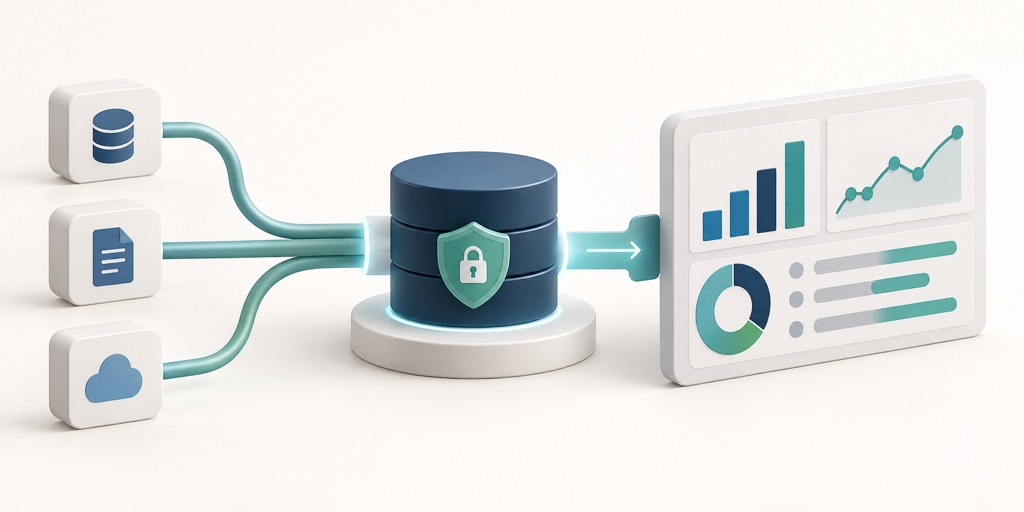
We start with the analytical consumers and trace back to source systems, transformation needs and the operating environment. The engagement can assess an existing platform, define a target architecture or deliver a bounded engineering and modernization phase. Requirements for freshness, history, access and cost are agreed rather than hidden behind a generic cloud migration promise.
Downstream consumption can connect with business intelligence consulting. Repeatable analytical tasks sit within analytics automation services; wider programs are introduced through our Data & AI services.
Data Platform Services From Architecture to Handover
Choose a strategy and architecture assessment, pipeline delivery, cloud-platform evaluation, warehouse modernization phase or master-data and governance engagement. The proposal identifies sources, target assets, environments, consumers and acceptance evidence. We distinguish advisory findings, pilot results and production deliverables. Software subscriptions, all-source remediation and recurring operations are included only when expressly scoped.
Data Strategy and Platform Architecture
We identify the business workloads, data estate, current constraints and target capabilities. Architecture planning records sources, analytical stores, processing boundaries, data consumers and ownership. The roadmap sequences work against dependencies and available capacity. It may recommend improving an existing platform before introducing another tool; a strategy engagement does not automatically include every downstream build or migration.
For business-led assessment and planning, explore our data strategy consulting and roadmap services. We scope priorities, current-state evidence, target capabilities, ownership recommendations and phased initiatives with explicit dependencies and review checkpoints.
- Business workloads and target capabilities
- Source, store, processing and consumer architecture
- Current constraints and dependency assessment
- Phased roadmap and delivery boundaries
Data Engineering and Integration Pipelines
Engineering scope defines how approved source data is ingested, transformed and delivered to agreed targets. We document schemas, keys, history and change behavior, quality rules, dependencies and failure handling. Pipeline validation checks outputs against source evidence and approved rules. Source-system changes, unsupported connectors and operational effects require separate assessment; connecting a source does not by itself establish business correctness.
For scoped pipeline and dataset delivery, explore our data engineering and pipeline development services. We assess source behavior, build ingestion and change handling, implement transformations, validate quality and reconciliation, and hand over execution controls and operating responsibilities.
- Approved sources and ingestion behavior
- Schemas, identifiers, history and transformations
- Quality rules and source-to-target checks
- Dependencies, failures and output ownership
Cloud Data Platforms and Warehouse Modernization
Platform fit considers workload patterns, data types, team skills, integration needs and operating constraints. Microsoft’s analytical data-store guidance illustrates why warehouse, lakehouse and other stores must be matched to the use case, not selected by name alone. Modernization planning inventories dependencies, reconciles migrated results and defines transition and rollback boundaries. Cloud adoption is not an automatic cost-saving or real-time guarantee.
For workload-led cloud architecture and transition, explore our cloud data platform consulting and implementation services. We scope platform fit, target design, environment readiness, phased migration, validation, usage and recovery assumptions, and operating handover.
For an existing warehouse transition, explore our data warehouse modernization and migration services. We scope warehouse and consumer dependencies, target compatibility, schema and logic changes, retained history, reconciliation, workload tests and controlled cutover with operating handover.
- Workload and team-skill platform fit
- Existing-platform and cloud-option assessment
- Warehouse dependencies and migration mapping
- Reconciliation, transition and rollback boundaries
Master Data and Governance Design
Master-data work identifies the agreed entities, identifiers, authoritative sources, matching rules and stewardship decisions. Governance design records ownership, definitions, permitted use, quality issue routes and lifecycle responsibilities for the scoped assets. These are connected but distinct disciplines. A catalog or matching rule does not create a universally correct golden record or prove compliance; organizational approvals and domain-specific evidence remain necessary.
For shared business-entity design and delivery, explore our master data management consulting and implementation services. We scope domain and source authority, entity models, matching and survivorship decisions, stewardship workflows, consumer distribution and validation with explicit operating responsibilities.
Validation, Transition and Operating Readiness
Release readiness combines output validation, access-boundary checks, dependency tests and operating walkthroughs for the agreed environment. Microsoft’s modern warehouse architecture example is a reference for separating raw, transformed and consumption-ready data; the design is adapted rather than assumed. Transition plans document cutover, recovery responsibilities and unresolved issues. Monitoring, incident coverage and ongoing optimization require their own operating scope.
Agree Your Data Platform Blueprint
The blueprint records sources, stores, processing paths, consumers and the environments included in delivery. It defines data quality and reconciliation evidence, access assumptions, history requirements and operating owners. Platform selection can retain existing tooling or evaluate alternatives against the agreed workload. We distinguish platform foundations from dashboard development, predictive models and continuous managed operations.
- Sources, targets and analytical consumers
- Data-store and processing architecture
- Quality, reconciliation and history requirements
- Access and permitted-use assumptions
- Release, transition and recovery evidence
- Operating owners and follow-on scope
Assign Platform, Source and Data Owners
Business and data owners approve definitions, use and acceptance priorities. Source owners explain upstream behavior and planned changes; platform and engineering owners maintain the technical assets and run procedures. Authorized security and governance functions approve their relevant boundaries. Consumer owners confirm how delivered data is used and manage downstream changes within their scope.
- Business and data owners approve definitions and intended use.
- Source owners explain upstream behavior and changes.
- Platform and engineering owners maintain assets and run procedures.
- Authorized governance and security owners approve their boundaries.
Our Data Platform Delivery Process
We assess the sources, consumers and platform constraints, then agree a target architecture and bounded delivery plan. Engineering or modernization work proceeds with documented mapping and quality decisions. Validation reviews source-to-target results, access and operating behavior before release. Handover transfers the agreed assets, evidence and responsibilities, with follow-on phases separately prioritized.
- Assess sources, consumers and current platform constraints.
- Agree target architecture and a bounded delivery plan.
- Build scoped pipelines or modernize agreed assets.
- Validate data, access and operating behavior.
- Hand over assets, evidence and operating responsibilities.
Validate the Data Foundation Before Release
Acceptance checks the agreed data outputs and operating behavior rather than platform installation alone. We review source-to-target reconciliation, identifiers and history, transformations and exceptions, access boundaries and representative consumer use. Cutover and recovery assumptions are documented with owner sign-off. A pilot or limited dataset test does not establish quality or performance for every source and workload.
- Source-to-target results reconcile within agreed rules
- Identifiers, history and transformations reviewed
- Quality exceptions and unresolved issues owned
- Access boundaries and consumer use validated
- Transition, recovery and handover responsibilities agreed
Data Platform Consulting FAQs
The agreed scope can include data strategy and architecture, engineering pipelines, cloud-platform evaluation, warehouse modernization, master-data design, governance requirements, validation and handover. We identify sources, targets, environments and consumers in the proposal. Individual dashboards, predictive models, subscriptions and recurring operations are separate unless specified.
A data platform provides the storage, processing and managed data assets that analytical consumers rely on. Business intelligence focuses on reporting models, metrics, dashboards and how people use them. The work is connected, but a platform engagement does not automatically include every dashboard or reporting tool implementation.
Not necessarily. We assess current platforms, workload needs, skills, costs and constraints before recommending a delivery route. An existing or hybrid approach may be suitable. Cloud migration requires explicit source and target scope, validation and transition planning; it is not assumed to reduce cost or remove operating responsibilities.
No. Freshness depends on source capabilities, ingestion and processing patterns, workload requirements and platform constraints. We agree the intended refresh or latency behavior and how it will be tested. A cloud platform or connector alone does not guarantee real-time delivery.
They are related but distinct. Master data management focuses on agreed business entities, identifiers, authoritative sources and stewardship or matching decisions. Governance defines ownership, permitted use, standards and lifecycle responsibilities. Both require business decisions and evidence; neither is completed simply by installing a catalog or tool.
Only when explicitly scoped. Project handover can include architecture, pipeline documentation, validation evidence and run procedures. Recurring monitoring, incident coverage, administration and optimization need defined services, coverage and owners. Unlimited or continuously staffed support is not included by default.
Plan Your Data Platform Engagement
Tell us which systems supply data, who consumes it and what needs to change in the current platform. Include data volumes and freshness needs where known, existing tools, access constraints and migration dependencies. We will shape an architecture assessment or delivery phase with explicit assets, validation evidence and operating responsibilities.